A new series of work by Italian photographer Lorenzo Grifantini looks at the effects of mass tourism on the historic cultural capital city of Rome. The article below was recently featured as a Photo Essay in The Guardian.
GREETINGS FROM ROME
Greetings from Rome looks at how the historic centre of the Italian capital has gradually reorganised itself around the uninterrupted flow of tourism and the expectations projected onto it.
Rome has always been shaped by the people passing through it. Pilgrims, tourists and travellers have crossed the city for centuries, following routes that already existed in the imagination before arriving there. What feels different today is the scale of that movement, and the way the historic centre has gradually reorganised itself around it.
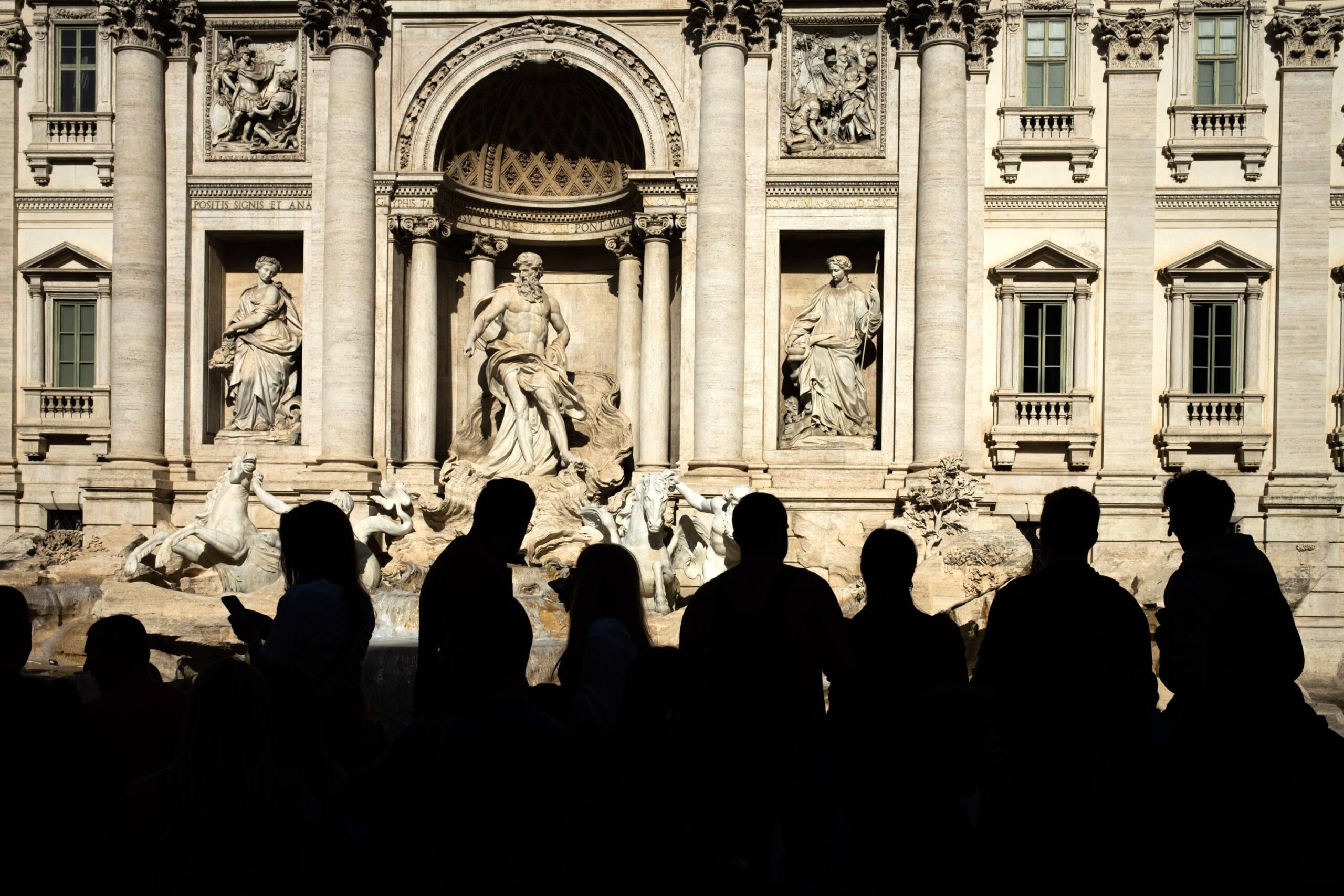
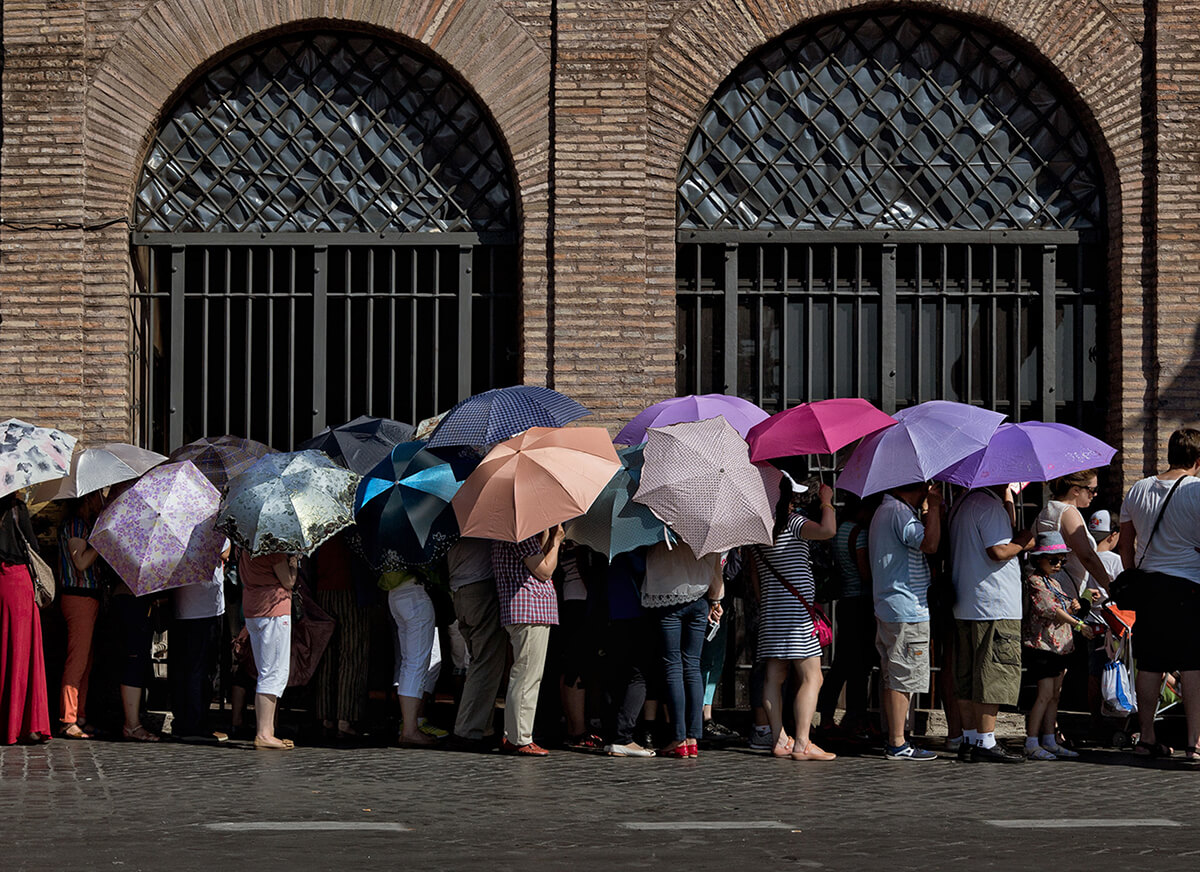
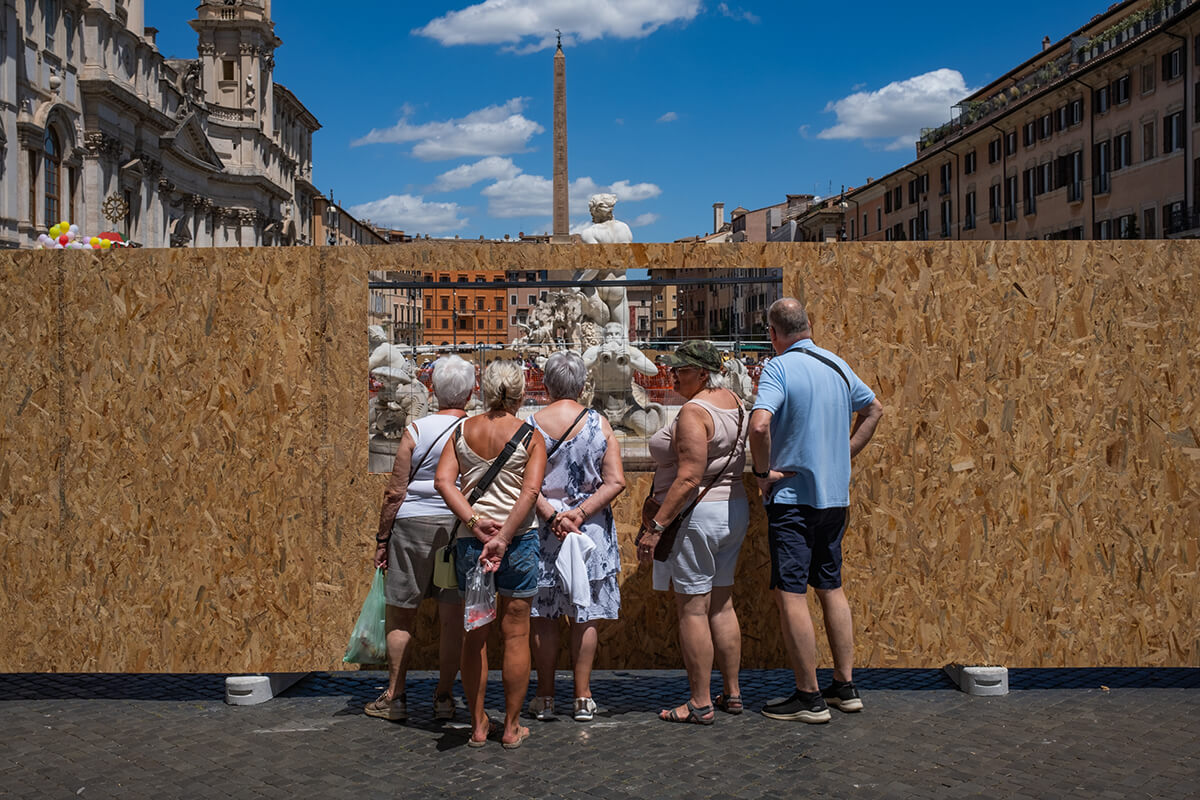
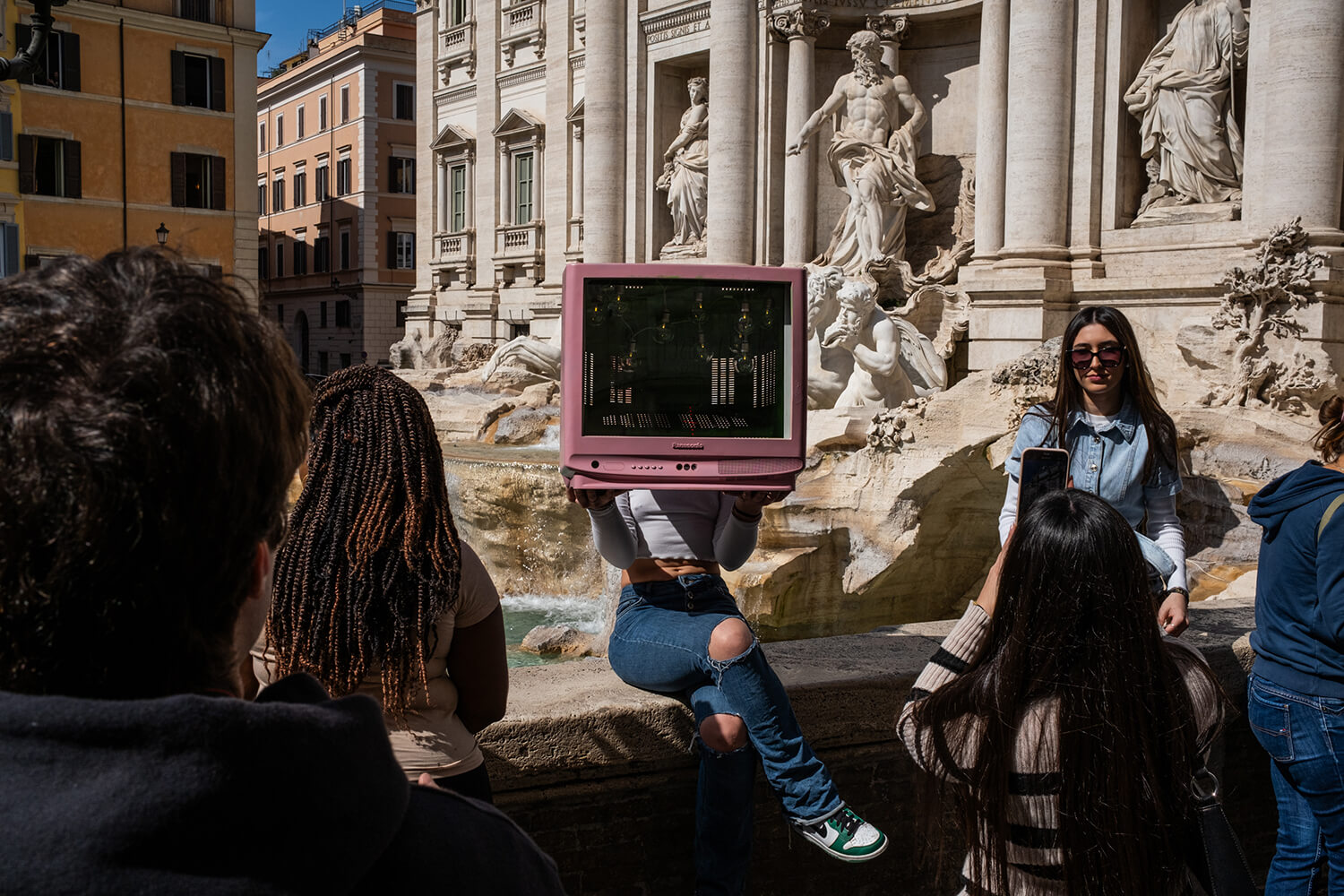
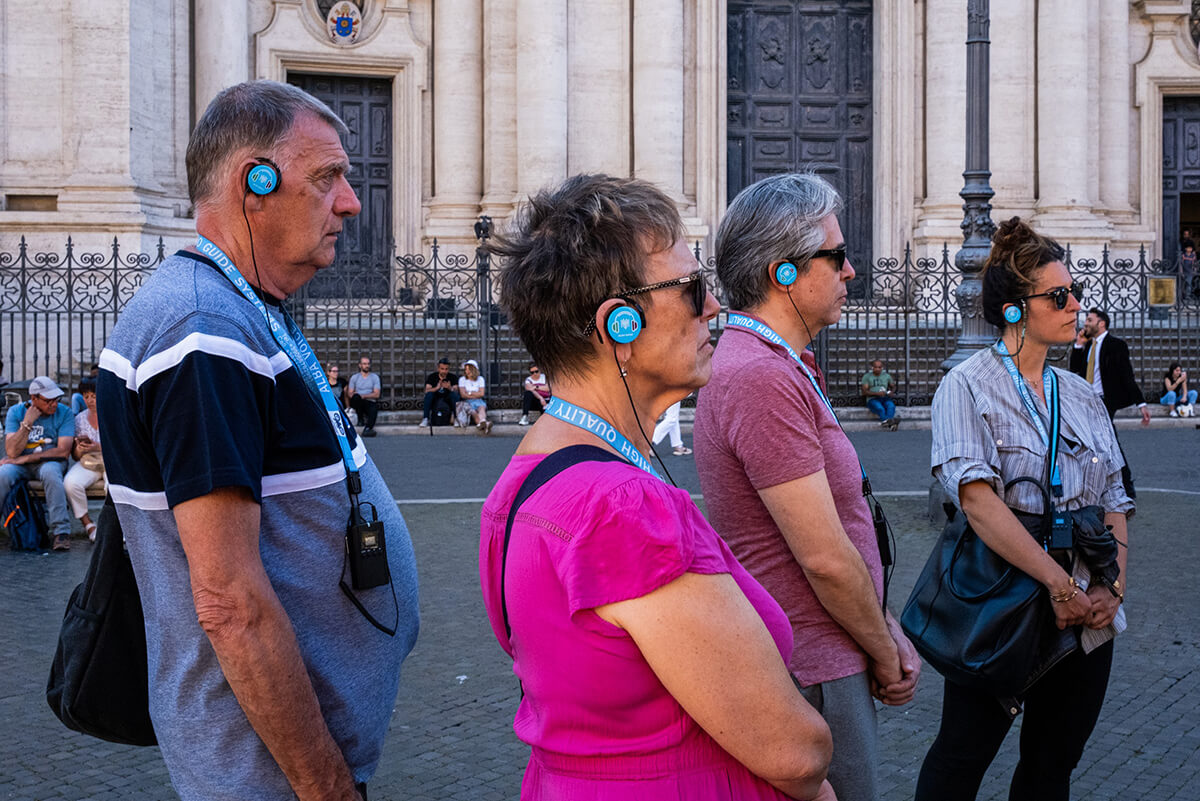
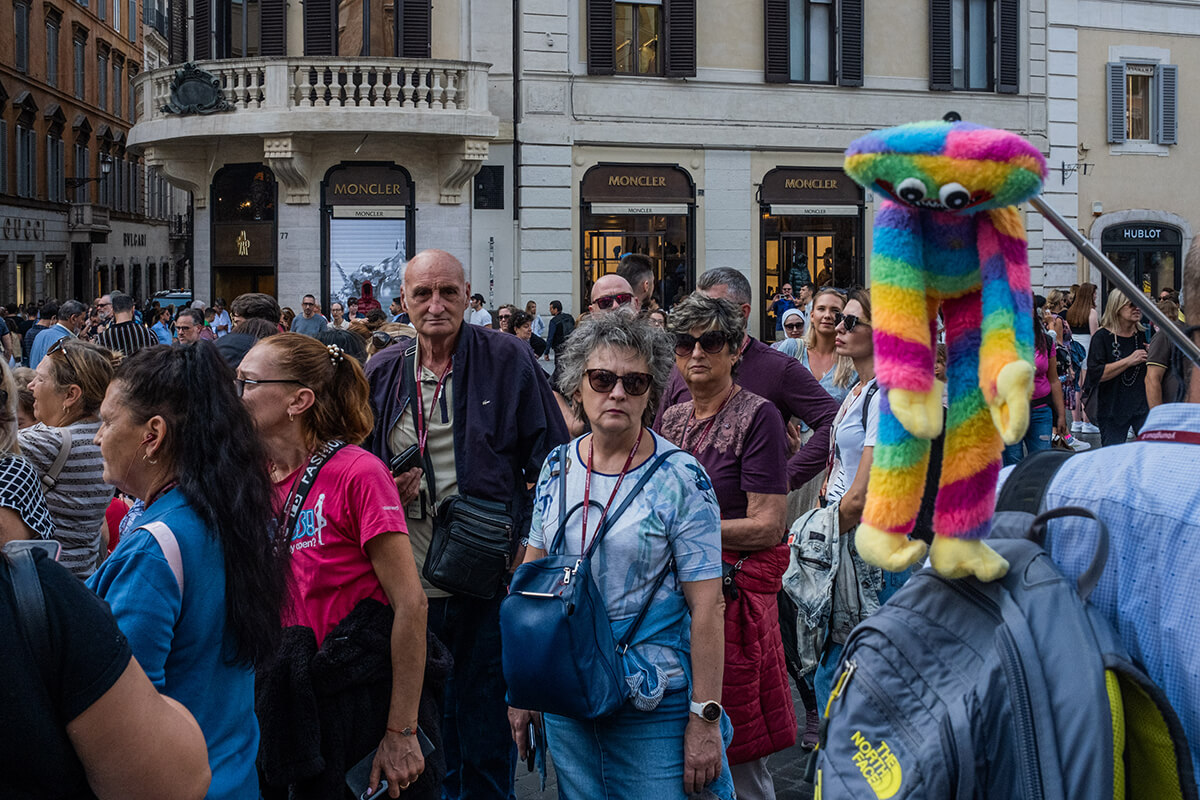
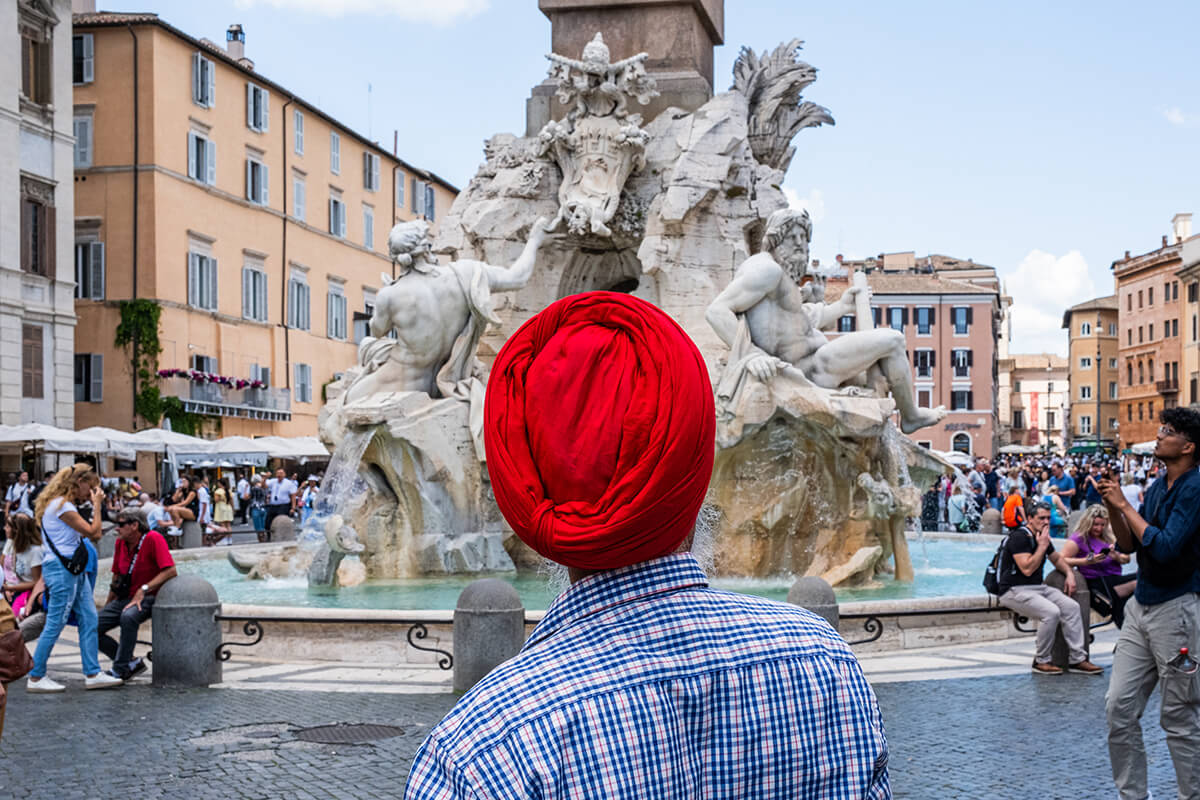
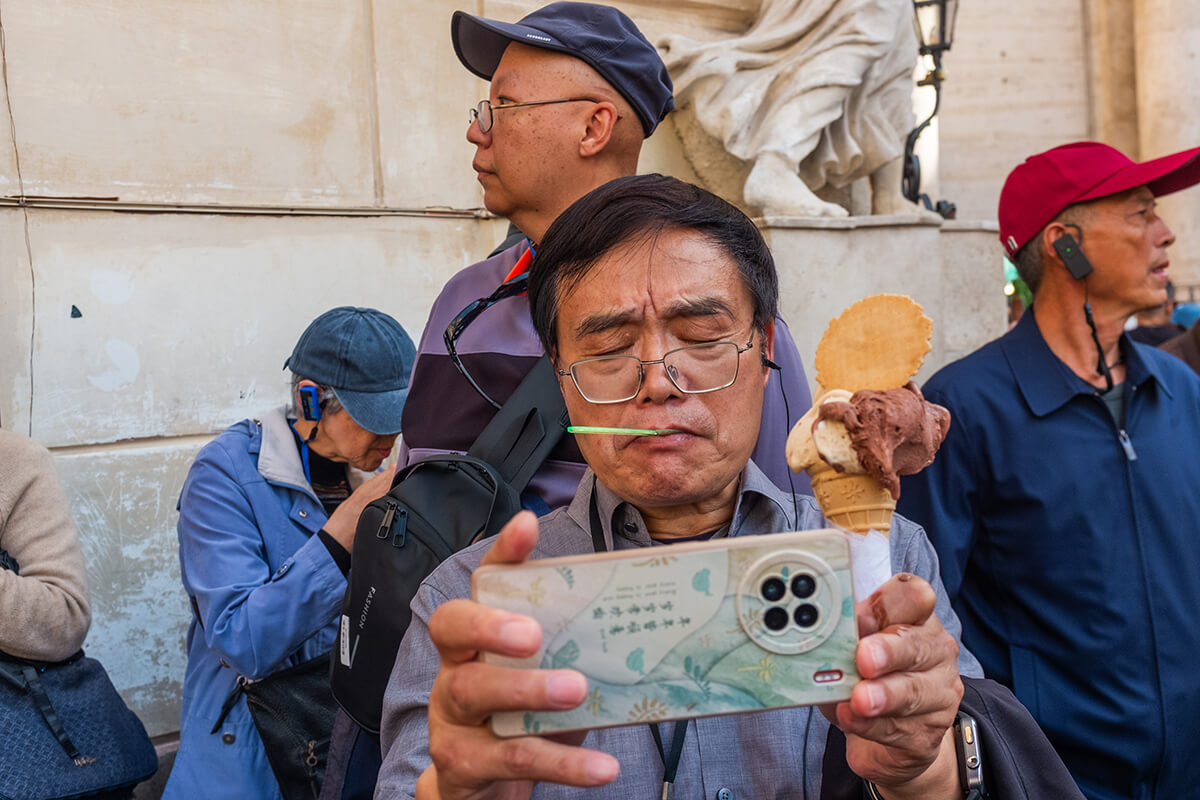
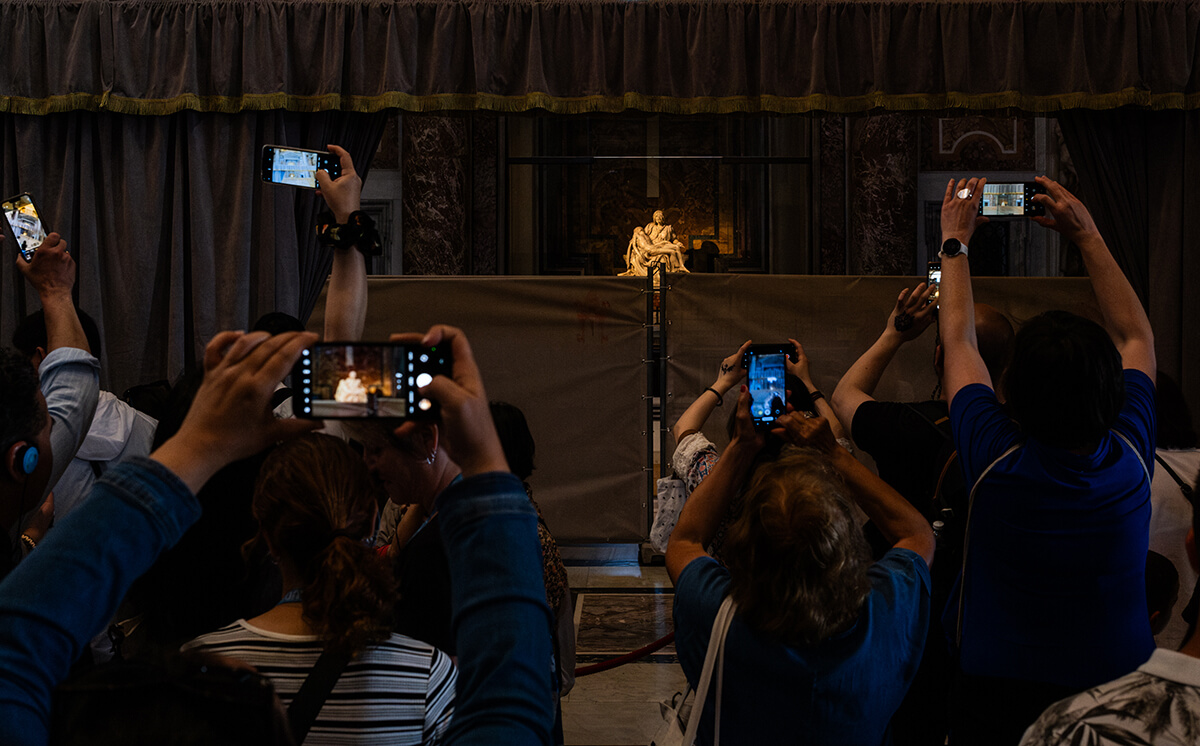
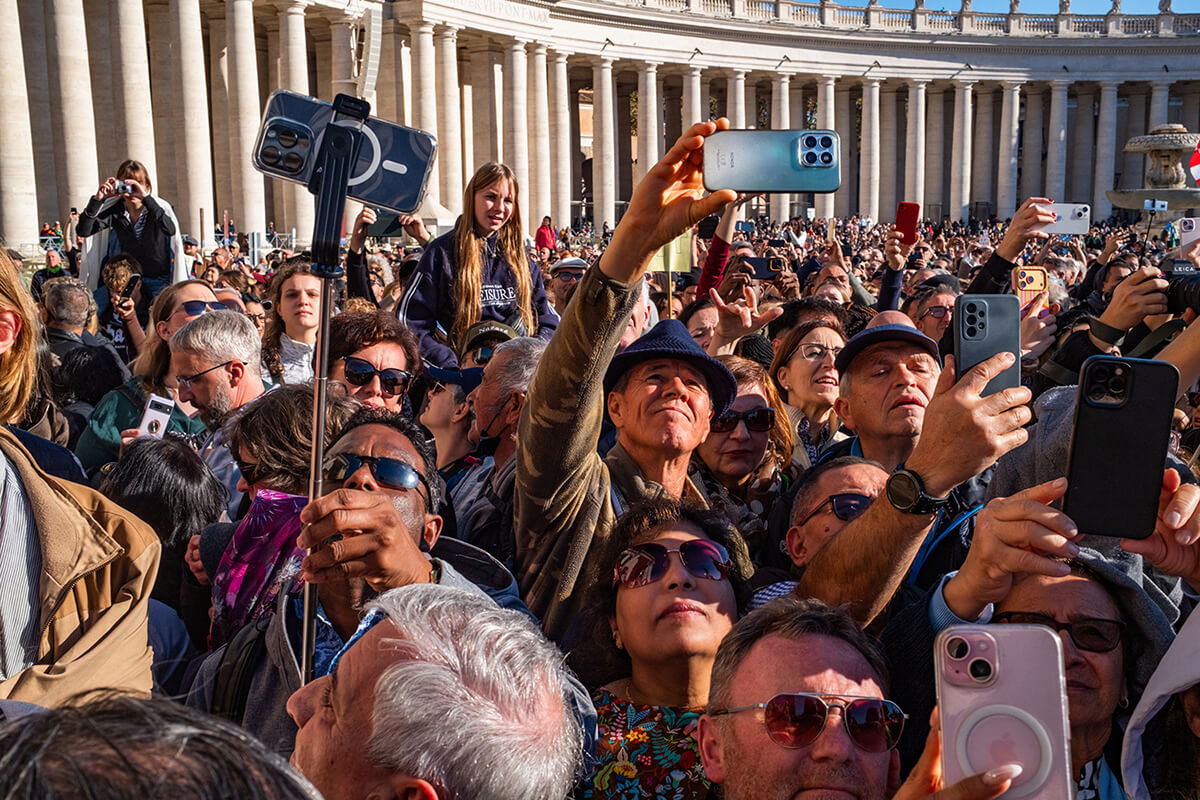
During the Jubilee year, Rome can often feel organised almost entirely around tourism. Groups gather, stop, queue, wait and disperse in repeating cycles around the city’s landmarks. Guided routes redirect pedestrian flows through barriers and temporary structures. Umbrellas rise above crowds. Monuments are experienced through phones and screens. Public space becomes a place of circulation, waiting and constant exposure.
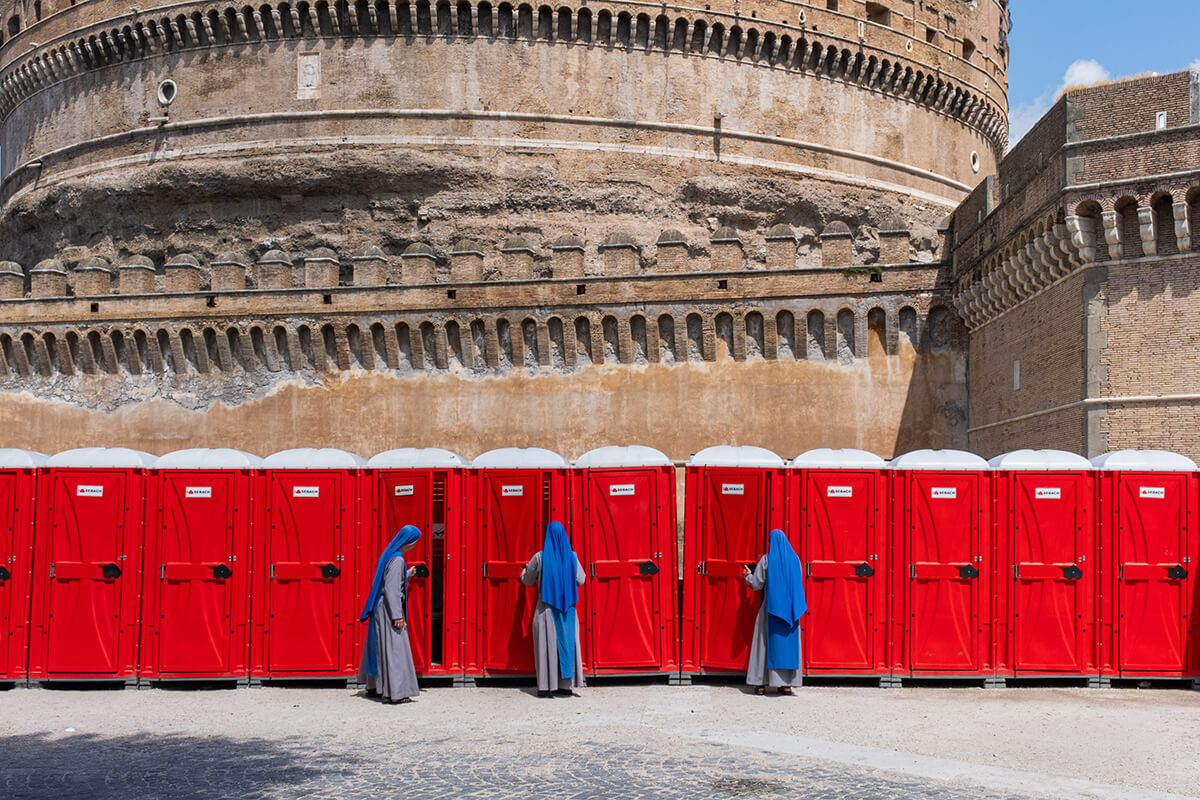
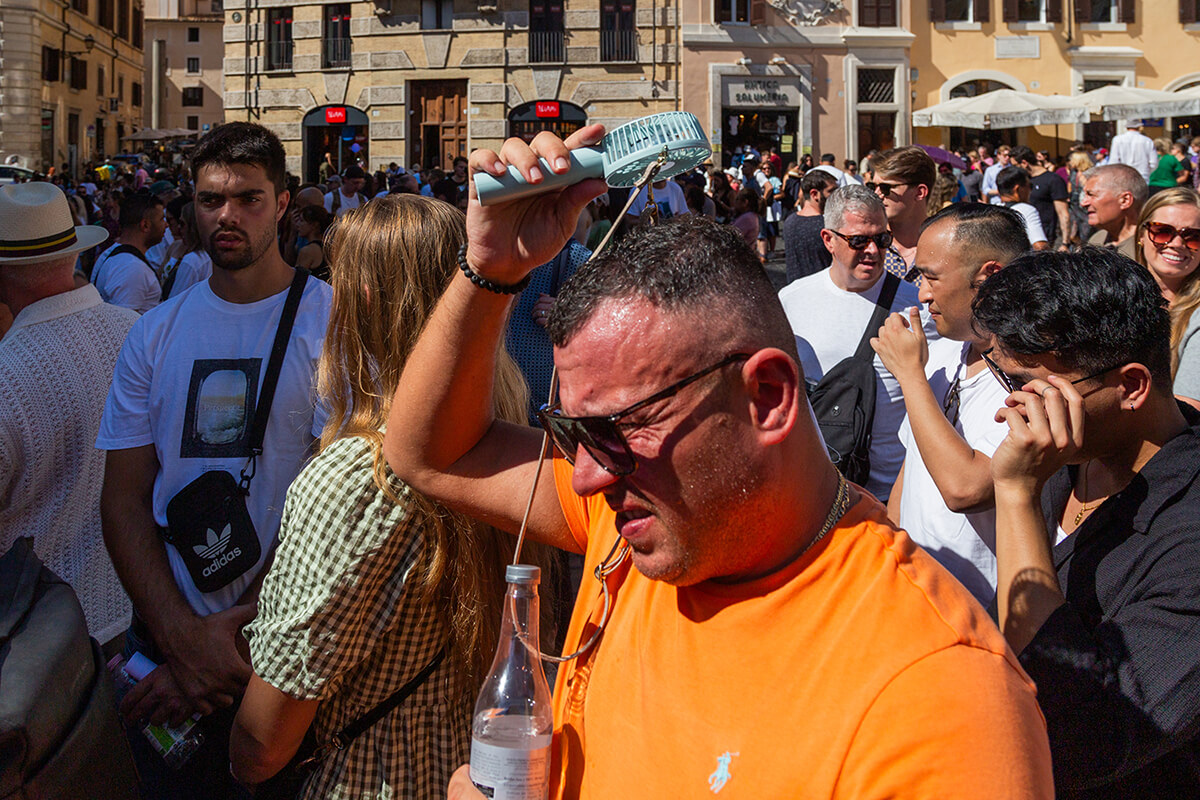
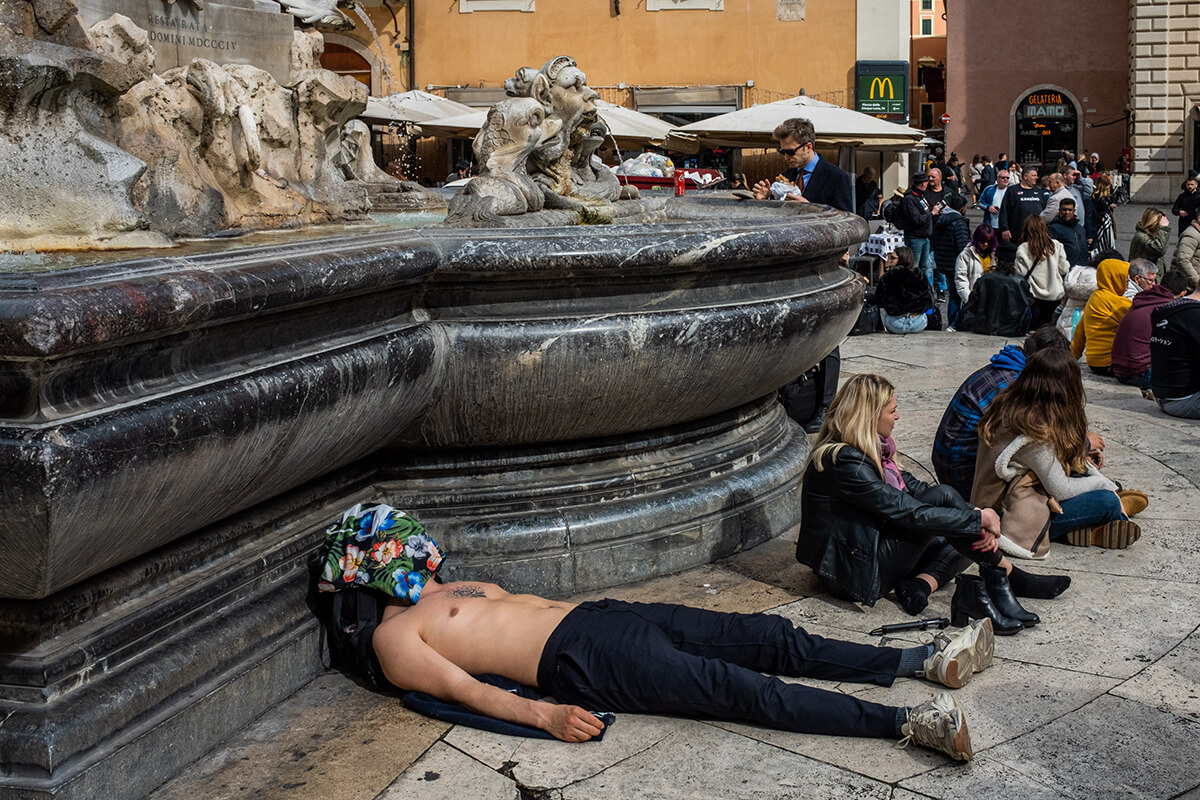
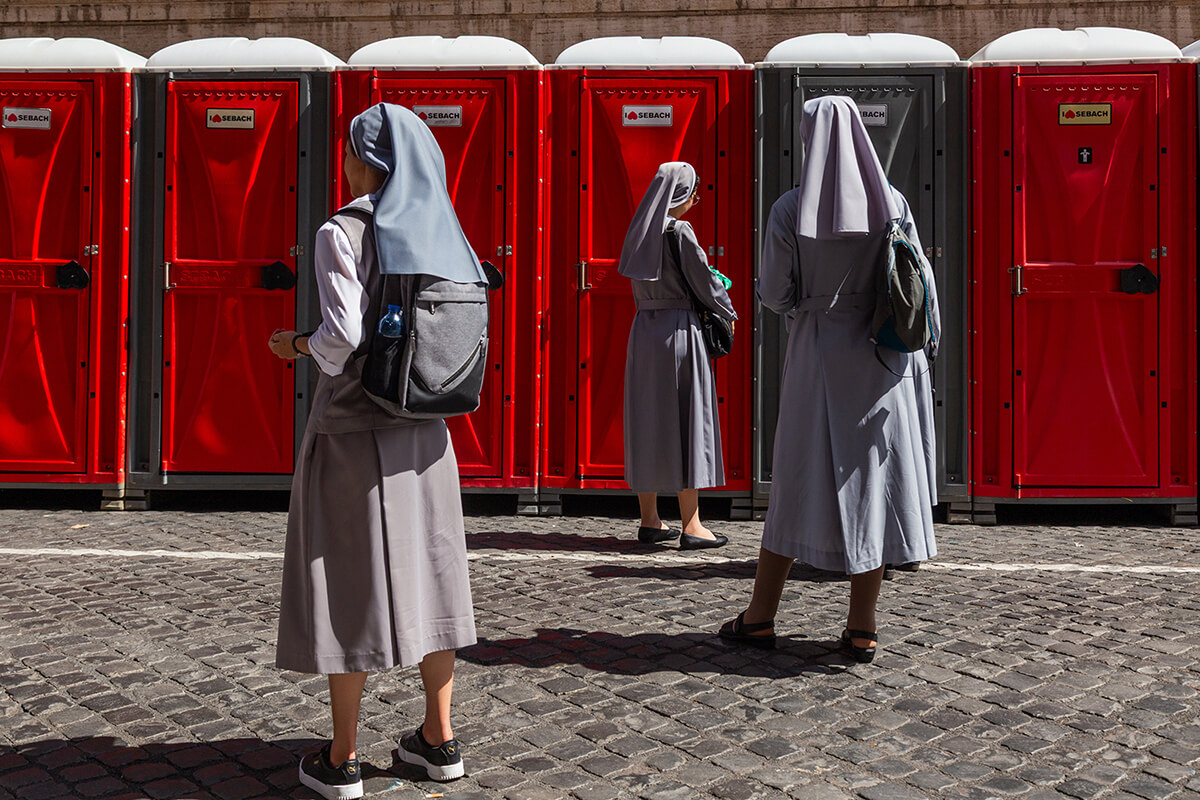
Many of the photographs in Greetings from Rome were made simply by walking through the historic centre and observing these repeated gestures and moments of transition. Pilgrims resting beside temporary toilets outside Castel Sant’Angelo. Visitors sheltering from the heat around fountains and church steps. Crowds raising smartphones towards the Pietà inside St Peter’s Basilica. Again and again, the city seemed shaped less by permanence than by movement itself.
What interested me was not overtourism understood only as overcrowding, but the quieter transformation happening underneath it: the way historic cities slowly begin to reflect the expectations and behaviour of the people moving through them.
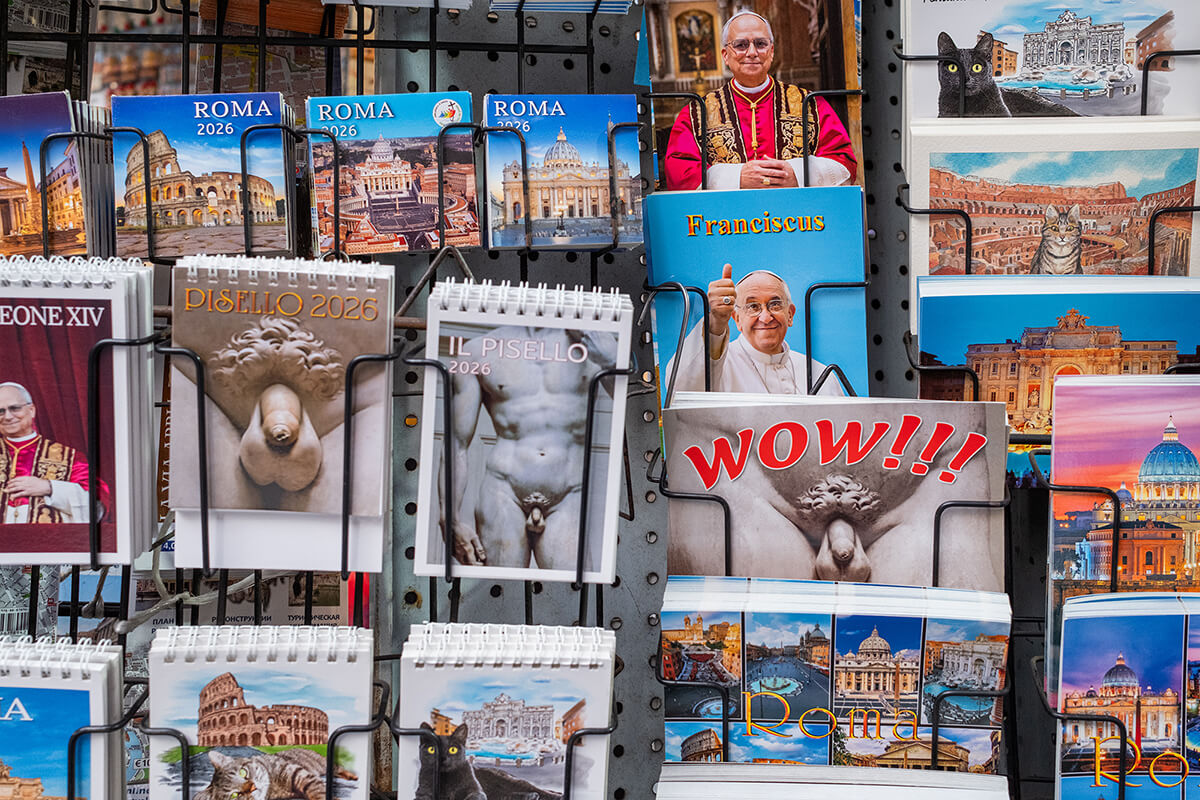
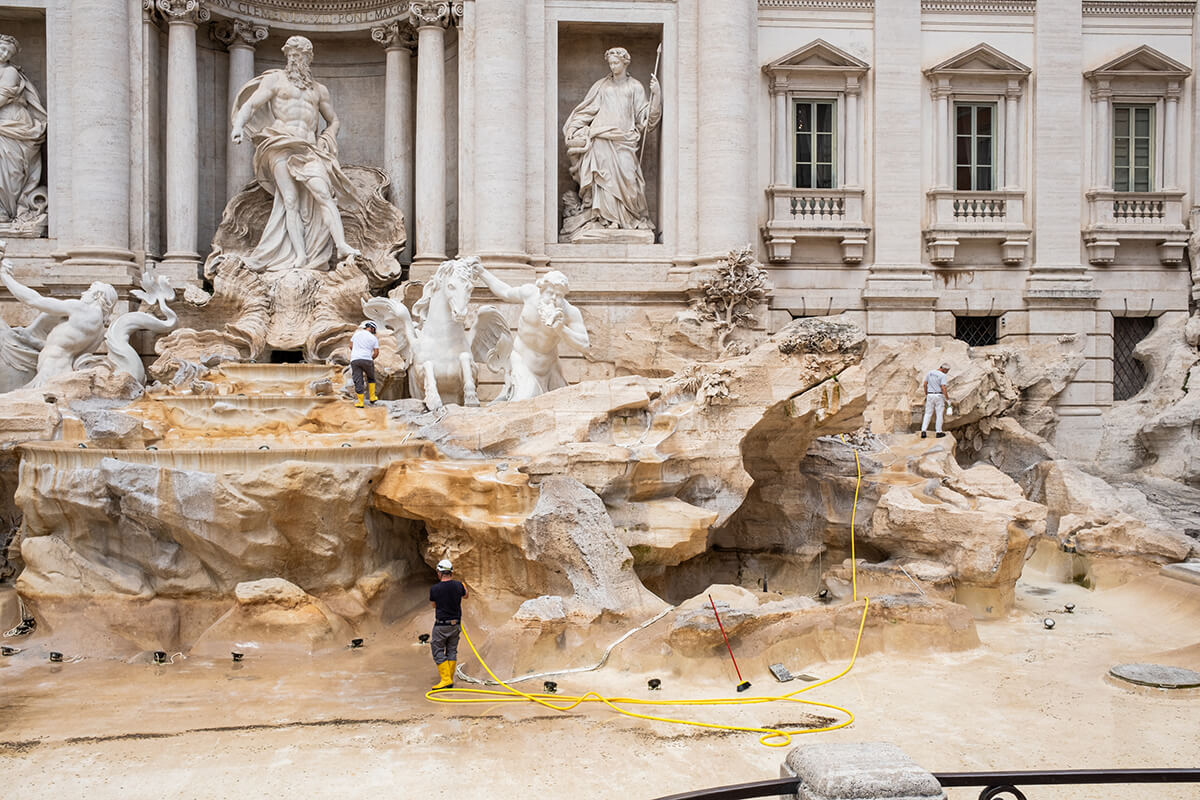
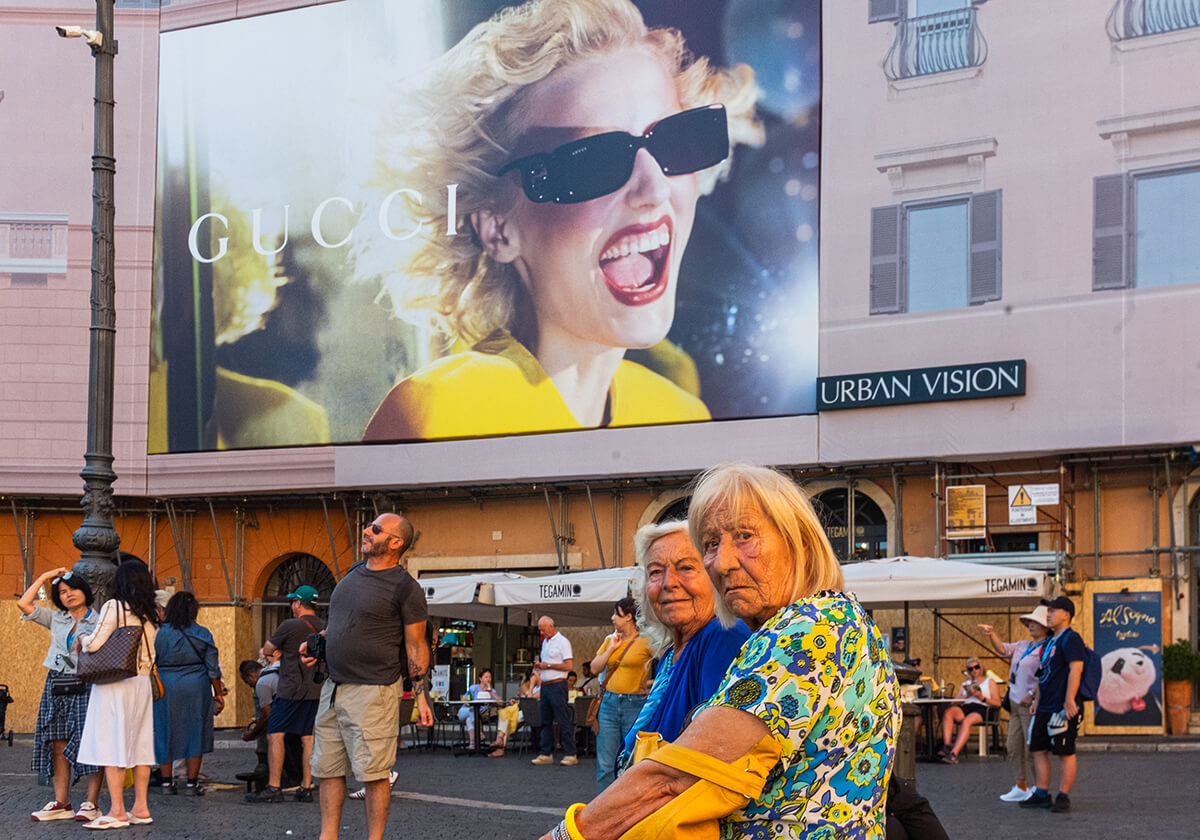
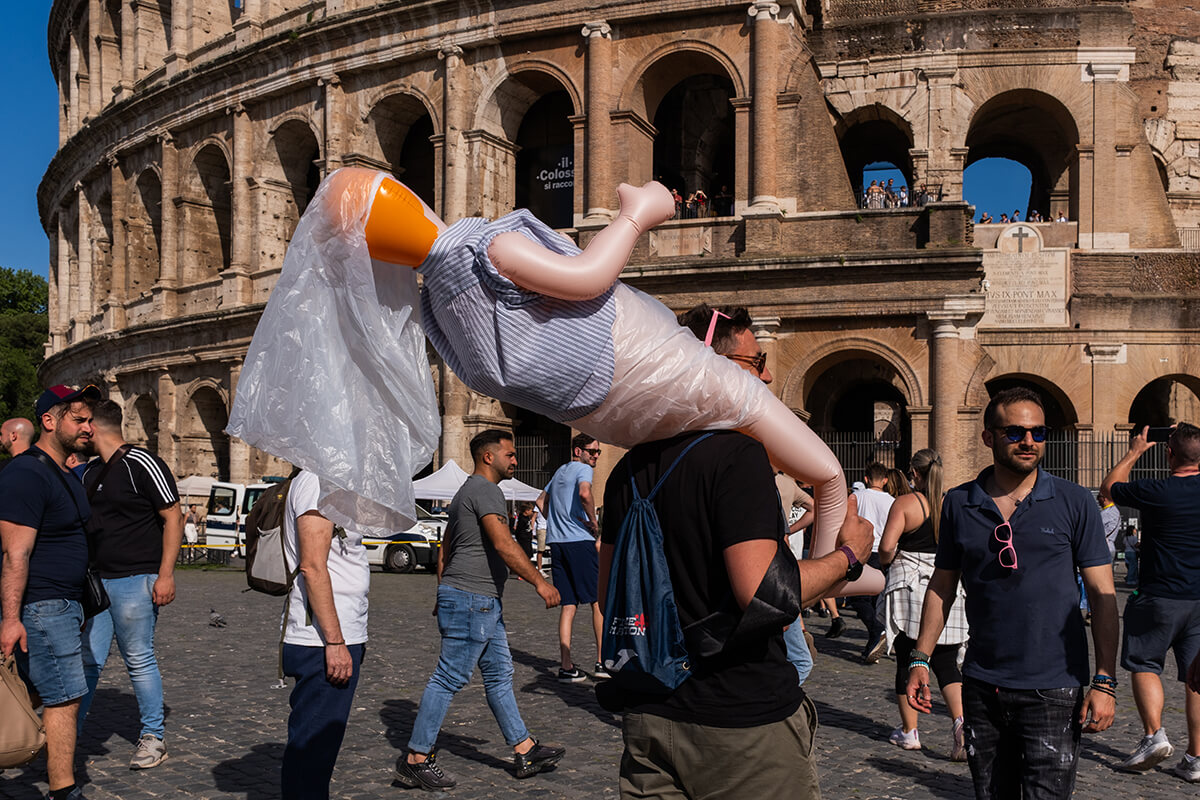
At times, the centre of Rome can feel suspended between sacred space, infrastructure and spectacle. Moments of devotion, leisure and consumption begin to overlap. Luxury advertising, souvenir kiosks, security systems and temporary barriers exist alongside some of the most symbolically charged monuments in the world, becoming part of the same visual landscape.
The project does not try to resolve these contradictions or judge the people inside them. Instead, it observes the city at street level, where tourism becomes physical: bodies exposed to heat, fatigue, waiting and repetition. Small gestures repeated thousands of times each day. Temporary presences moving through a city built around permanence.
Over time, the work became less about tourism itself and more about adaptation: how public space changes when it is organised around uninterrupted movement, visibility and passage.
Rome remains one of the most visited cities in the world, but it has also become a prototype for something larger — a historic city increasingly reshaped by the continuous flow of people passing through it.